
Ecommerce and localization
Before entering a new market, test what your product page lets customers buy
An English product page can serve several countries while offering a different buying experience in each one. The currency changes, but the selected bundle changes too. A delivery promise applies to dispatch, not arrival. The return address belongs to a different seller. Before announcing a new market, test one complete purchase path for that market. A translated headline is not evidence that the offer is ready.
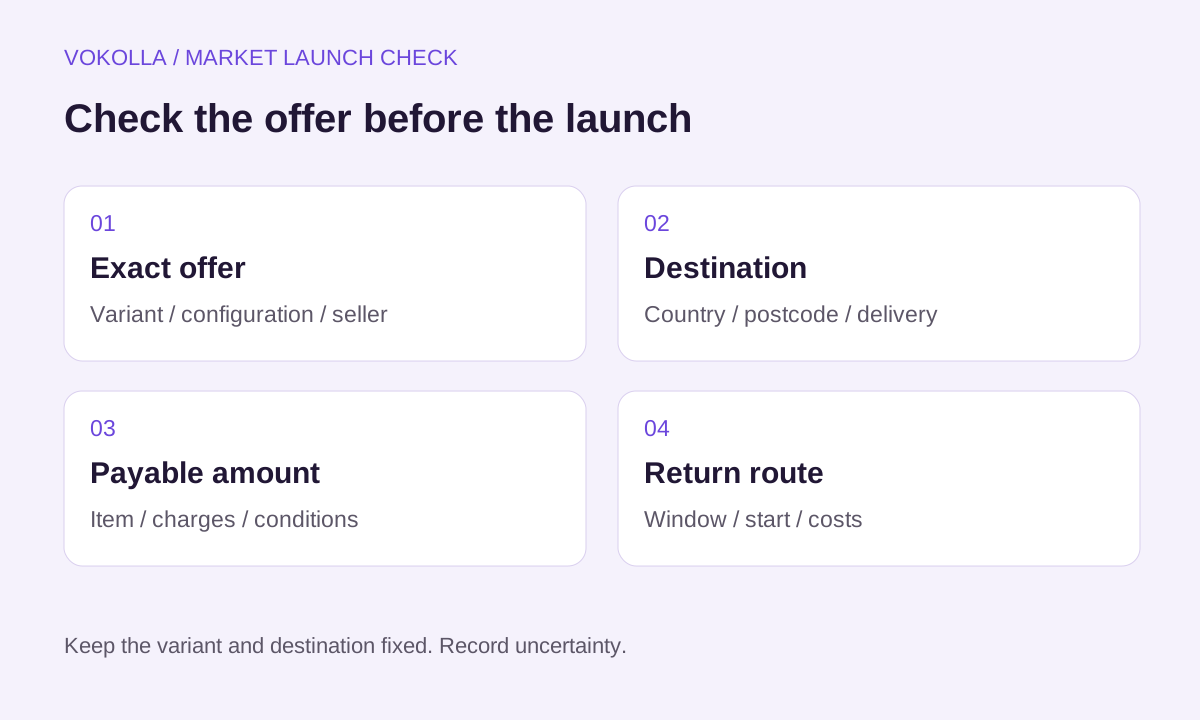
1. Define the offer before auditing the translation
Write a one-line test case: market, language, seller, product identifier, configuration, quantity and destination postcode. For footwear, include size and width; for electronics, include the dock, charging case or regional version. Keep that case fixed as you move through the site. Otherwise a cheaper price or different delivery result may belong to another offer.
Use a supported test environment where available. On a live store, stop before placing an order. Do not create a paid transaction simply to prove that the last button works; payment validation needs its own controlled procedure.
| Field | What to record |
|---|---|
| Offer identity | Product URL, identifier, selected options and seller |
| Destination | Country and postcode; language and currency separately |
| Observed result | Exact page text or screenshot, URL and check time |
| Uncertainty | What remains unknown, responsible owner and next check |
2. Check the questions that decide whether someone can buy
Start with the selected configuration, not the product family name. Compare what is pictured, what is named and what is included. If a region uses a different model code, confirm the relationship from product documentation rather than assuming two similar names mean identical hardware.
Can this exact item reach this destination?
Choose the destination before interpreting stock or delivery claims. Separate available stock, preorder, backorder and unsupported delivery. Record whether a date means dispatch or arrival. A country selector alone does not establish that a particular postcode is served.
What will this customer pay?
Compare product price, discount conditions, shipping and the stated treatment of taxes or import charges. Keep item price separate from the final payable amount. If a charge cannot yet be determined, say where and when the customer will see it; do not label an estimate as a confirmed total.
For businesses using Google Merchant Center, submitted price and currency must match the landing page and checkout under its applicable rules. That is a platform requirement, not evidence that an offer complies with every local law.
What happens if it needs to go back?
Follow the return link from this seller’s regional page. Record the stated window, when it starts, item-condition exclusions, return destination and any stated charges. A global “easy returns” headline is not enough for this test. Where the policy is ambiguous, get the answer resolved before summarizing it in a campaign.
3. Fix the contradiction before polishing the copy
Illustrative scenario: a brand is preparing a German launch for a pair of wireless earbuds. The ad names a wireless-charging case. The German page defaults to a USB-only case; the basket retains that selection. The translation is fluent, but the advertised offer and the purchasable offer differ. This is a constructed example, not a claim about a named retailer.
The useful correction is to align the campaign link, selected variant and description. If the advertised configuration cannot be supplied, change the launch scope or timing. Do not simply replace the product with a convenient alternative and mark the check complete.
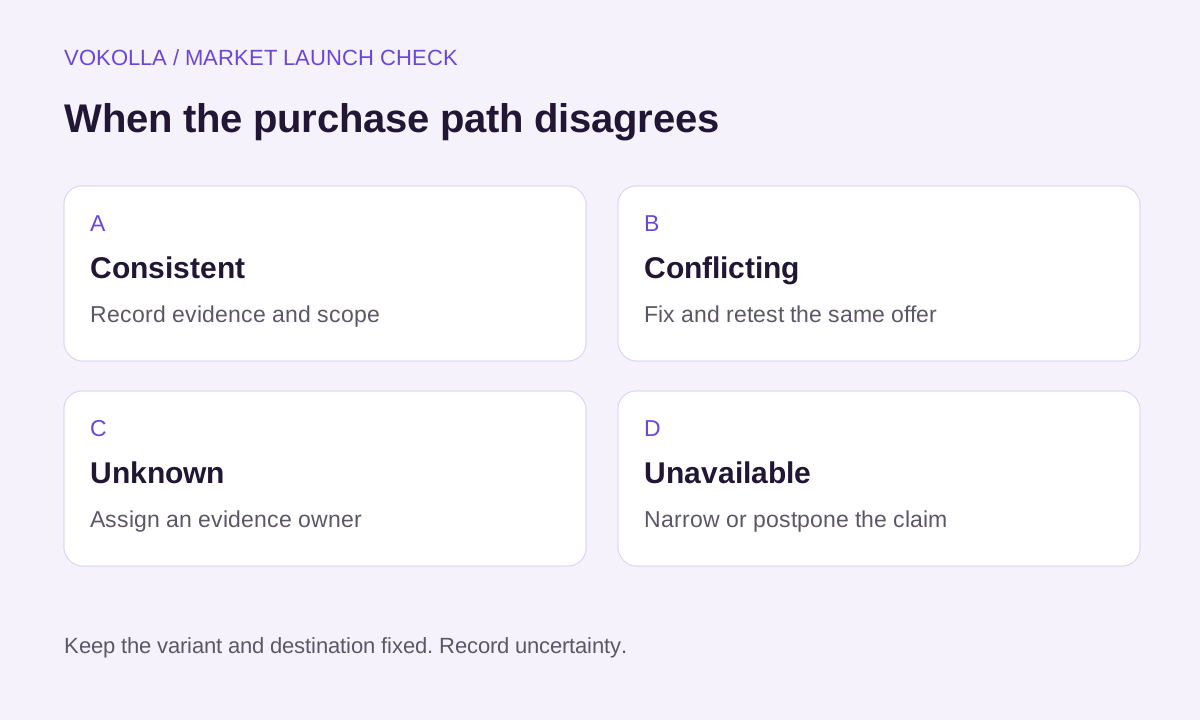
- Confirmed: the same variant and destination are consistent across the checked steps.
- Conflicting: two sources disagree; retain both observations until resolved.
- Unknown: evidence is missing; assign an owner rather than guessing.
- Unavailable: the seller explicitly cannot supply this offer to that destination.
4. Give people and search systems the same offer
Google recommends separate URLs for language versions, language-switching links and appropriate hreflang annotations. Country and language are different choices: a German-language page does not by itself define delivery to Germany. Check that a person can return to the intended version without being repeatedly redirected.
Merchant listing structured data can describe offers, shipping and returns. Treat it as another representation to check against the visible page—not a place to add a more attractive price or promise. Valid markup does not guarantee a rich result.
Source: Google Search Central — Managing multi-regional and multilingual sites
Source: Google Search Central — Merchant listing structured data
5. Make a release decision for the checked scope
Our suggested release gate is narrow: hold promotion of a specific market offer when its identity, destination support or payable-price explanation remains contradictory. A typo can be queued; an unknown delivery restriction changes what the announcement can honestly claim. This is an editorial operating rule, not a statistical finding.
Start with the variants featured in the campaign, then cover configuration boundaries: a different dock, size range, shipping zone or promotional condition. A spot check does not certify an entire catalog. Recheck when prices, stock rules, regional pages or return policies change.
Once the offer is ready, a market-entry announcement can state the actual availability, local customer benefit and relevant product link. Press release distribution should carry that checked story. It cannot repair the buying path behind the link.
Sources and editorial method
Prepared by Vokolla with AI-assisted research and writing. Factual platform guidance was checked against the primary sources below. The diagrams, checklist and examples are editorial recommendations, not platform rules or measured customer results.
- Google Search Central — Managing multi-regional and multilingual sites — Checked 2026-10-18
- Google Merchant Center — Price attribute — Checked 2026-10-18
- Google Search Central — Merchant listing structured data — Checked 2026-10-18